2026 Festival

About Time

To celebrate our 16th anniversary join us for this most special journey across five concerts featuring music spanning five centuries.
We will be joined on this exciting musical exploration by some of the most celebrated musicians performing in the world today. Artistic Director Lawrence Power, Stephanie Gonley, Charlotte Spruit, Annabelle Meare, Sergio Bucheli, Simon Crawford-Phillips, John Myerscough and others!

Thursday September 17th @ 7:30PM
Friday September 18th @ 1:00PM
Friday September 18th @ 7:30PM
Saturday September 19th @ 11:00AM
Saturday September 19th @ 8.00PM
Thursday September 17th @ 7:30PM

“Celestial Clocks”

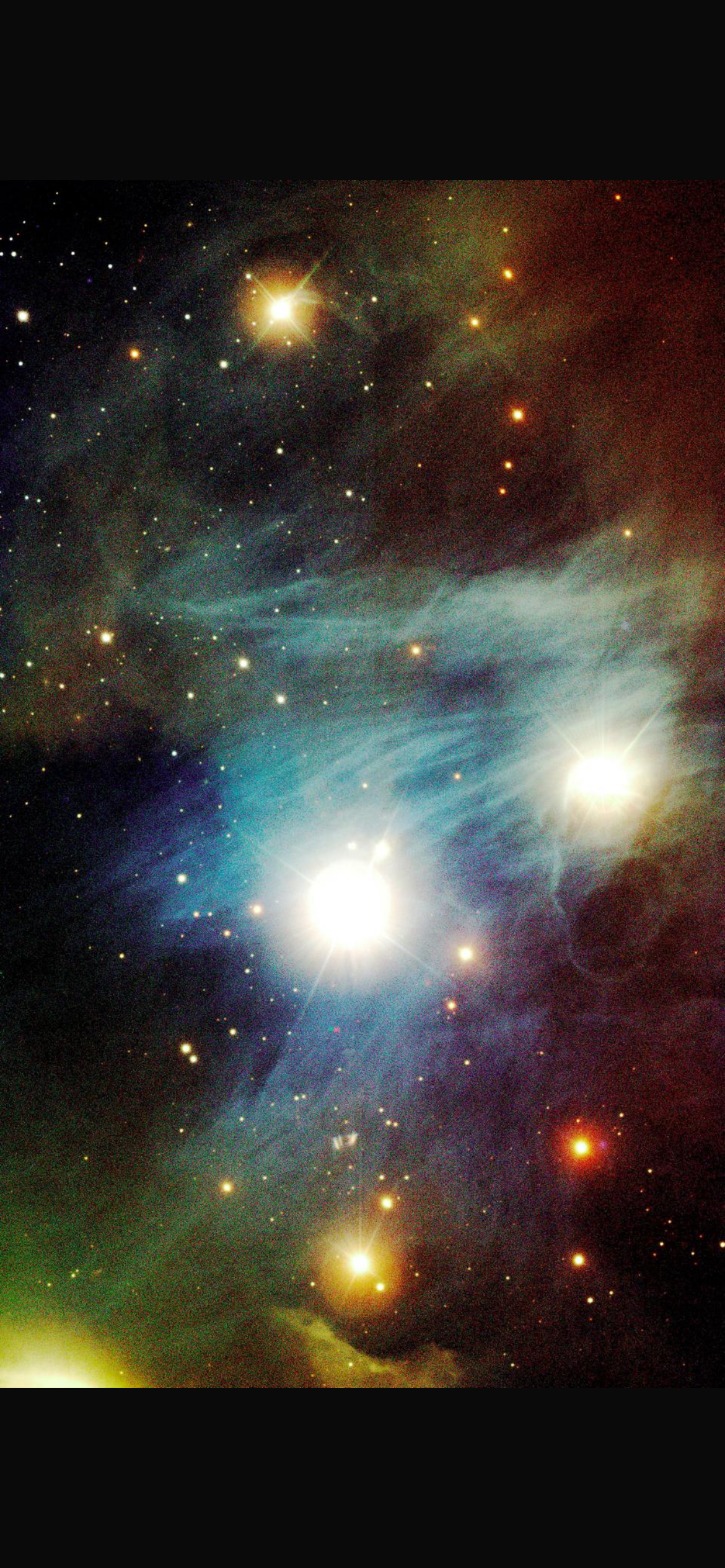
A fascinating journey across the ages starting in late 16th-century Florence at the Galilei house, a famous lute playing family, whose son Galileo would go on to define modern astronomy and our understanding of time for hundreds of years to come.
In 1807 Beethoven wrote his string quartet Op 59/2 whose famous slow movement was inspired (according to his student Czerny) by a particular starry night and his fascination with the music of the spheres.
This programme celebrates the worlds of these two giants of music and science  with music that manipulates time – works that stretch, compress, reverse, warp and even stop time!

Interval

Stephanie Gonley and Annabelle Meare (violins), Lawrence Power (viola), John Myerscough (cello), Sergio Bucheli (lute), Simon Crawford-Phillips (piano)

Friday September 18th @ 1:00PM

“Towards a New Life”

In 1916 Nadia Boulanger wrote her seminal piano work Towards a New Life. Written during the darkest days of the first world war, it’s music that looks ahead to a new world that would never be the same.
In 1921, Fauré (Boulanger’s teacher) wrote his Cello Sonata No. 2, a work defined by its slow movement which started life as a commission to mark the 100th anniversary of death of Napoleon.
Dvorak composed his ‘American’ Quartet in 1893 during a summer break in the town of Spilville, Iowa which was home to a thriving Czech community. Written in just 3 days, his joy at being reunited with family and friends seems to inhabit every bar of this masterpiece. It proved a turning point for Dvorak who felt he had finally brought together melody and structure in chamber music.

Stephanie Gonley and Annabelle Meare (violins),  Lawrence Power (viola), John Myerscough (cello), Simon Crawford-Phillips (piano)

.

Friday September 18th @ 7:30PM

“Songs of Farewell”

6 works, 6 moments in time.

“Mourn with me, my friend! This was the saddest day of my life… my mother, my dear mother, is no more!”
wrote Mozart in 1778. Having been travelling together in Paris the 22 year old Mozart lost his mother after a short illness. His E minor Violin Sonata, written directly after seems to be an intense emotional outlet for the young Mozart.

In 1980 Peter Maxwell Davies wrote his ‘Farewell to Stromness’ as a musical protest against a proposed uranium mine near the village of Stromness on the Orkney Islands.
The slow, steady baseline in the piano melody represents the sorrowful footsteps of the local villagers forced to leave their homeland behind forever due to environmental destruction.

“ I have no words with which to express the pain that racked my entire being when I received this news… I am totally indebted to him for all my education. It will be unbelievably hard to live without him.’ wrote Shostakovich about the passing of his close friend and brilliant musicologist Ivan Sollertinsky. He dedicated his Piano Trio No.2 to his close friend and created one of the most original chamber music masterpieces, a work inspired by the tragedies and horrors of the second world war.

Continuing the tradition of commemorating individuals through music, Arthur Benjamin’s ‘Tombeau de Ravel’ celebrates the dazzling essence of Ravel in its colourful and lyrical use the of the piano and viola.

Finishing with Mendelssohn’s last major work his String Quartet No. 6, written as a homage to his sister Fanny who died earlier that year. 

Interval

Stephanie Gonley, Charlotte Spruit and Annabelle Meare (violins), Lawrence Power (viola), John Myerscough (cello), Simon Crawford-Phillips (piano)

Saturday September 19th @ 11:00AM

“Young Artists”

Our celebration of today’s most exciting young artists has become a highlight of each festival. This year is no exception with Fidelio, Fabien, Gabriel and Charlotte performing some of the most beloved chamber music by Mozart, Saint-Saens, Schumann and Mendelssohn.

Fidelio Coles and Charlotte Spruit (violins),  Lawrence Power (viola), Fabian Broman Crawford-Phillips (cello), Gabriel Power (piano)

.

Saturday September 19th @ 8.00PM

“Time Re-imagined”

Across genres and generations, musicians have grappled with the passage of time —its beauty, its brutality, and its mystery.
From ticking clocks and stretched-out rhythms to lyrics that mourn lost moments or anticipate futures unknown, our final concert celebrates a vast array of music. Including Bayard Rustin, the important American political activist and musician, Machaut’s famous musical game, Edith Piaf’s best known song, reworked and used by Hans Zimmer for his film score ‘Inception’ and finishing with Geminiani’s take on ‘La Folia’ – perhaps the most famous time-travelling chord progression that composers have reacted to over hundreds of years.

Interval

Charlotte Spruit, Annabelle Meare and Fidelio Coles (violins), Lawrence Power (viola), John Myerscough and Fabian Broman Crawford-Phillips (cellos), Sergio Bucheli (lutes), Gabriel Power (piano)

To enjoy any or all of the above concerts please see the Tickets & Contact Information page.